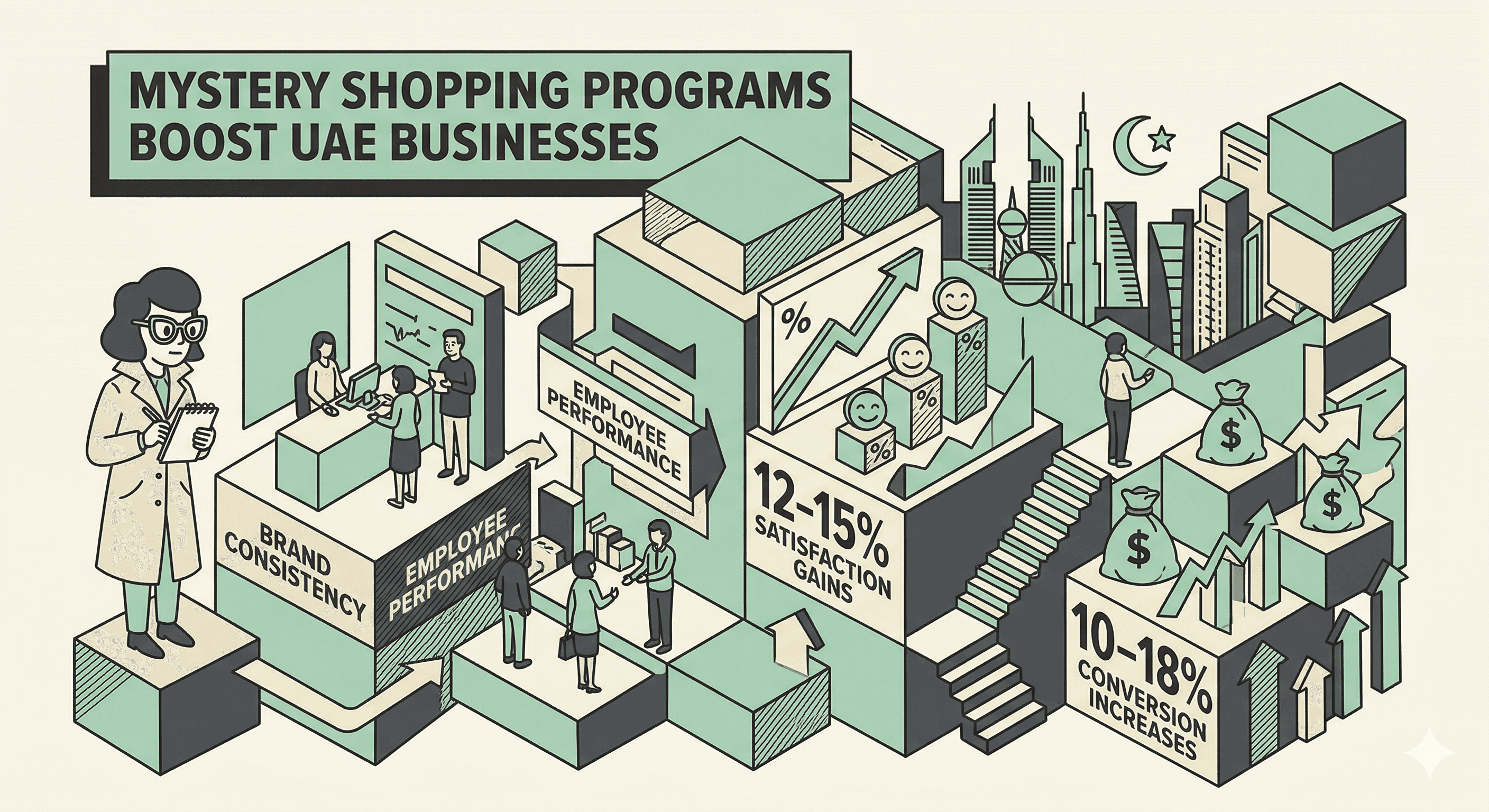
Mystery shopping in the UAE is a structured CX audit that improves service consistency, employee performance, compliance, and conversion across locations.
Iqbal Aly
Mystery Shopping UAE
Why Mystery Shopping Is Important for UAE Businesses
In the UAE, customer experience is not a “nice to have.” It’s often the difference between a one-time transaction and a loyal customer who returns (and tells others). Brands compete hard on service, speed, consistency, and trust, especially in retail, F&B, banking, hospitality, healthcare, and telecom.
The challenge is this: most leadership teams think the customer experience is better than it really is. SOPs look perfect on paper, dashboards show decent numbers, and store managers report that everything is fine. But the real customer journey happens in small moments, greetings, wait time, product knowledge, follow-up, handling complaints, and how confidently staff closes a sale.
That’s where mystery shopping becomes one of the most practical tools a business can use.
What mystery shopping actually is
Mystery shopping is the process of sending trained “undercover” evaluators (often called secret shoppers) to interact with your business like real customers. They might:
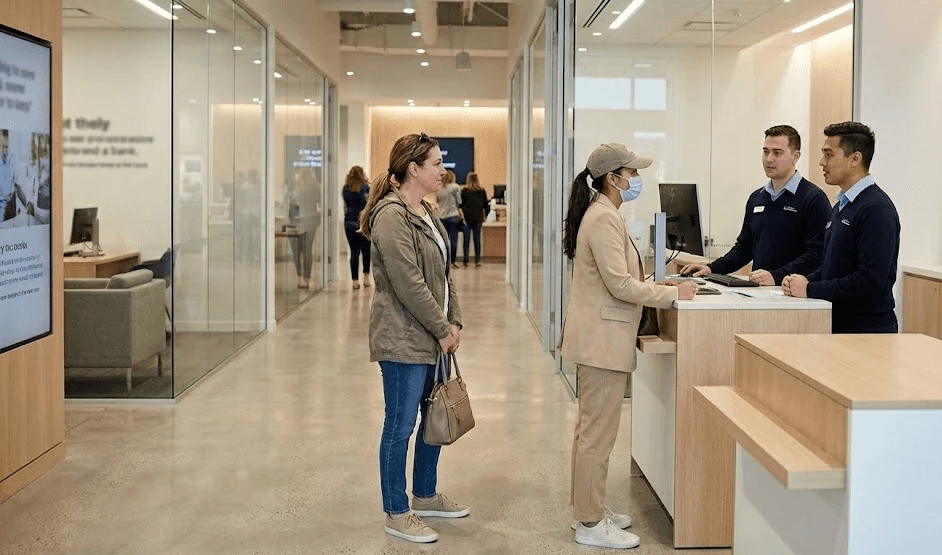
Visit a store or branch
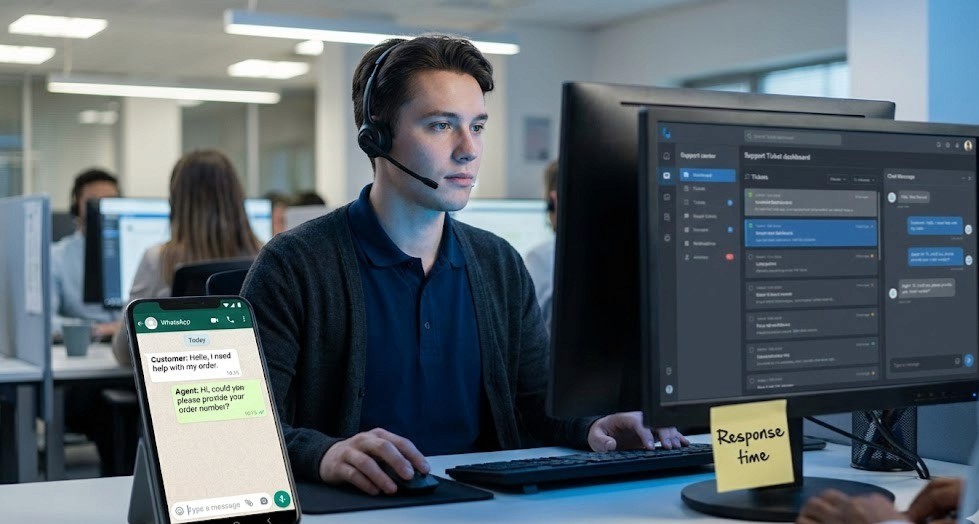
Call your contact center
Use WhatsApp or live chat
Submit an online enquiry
Place an order digitally
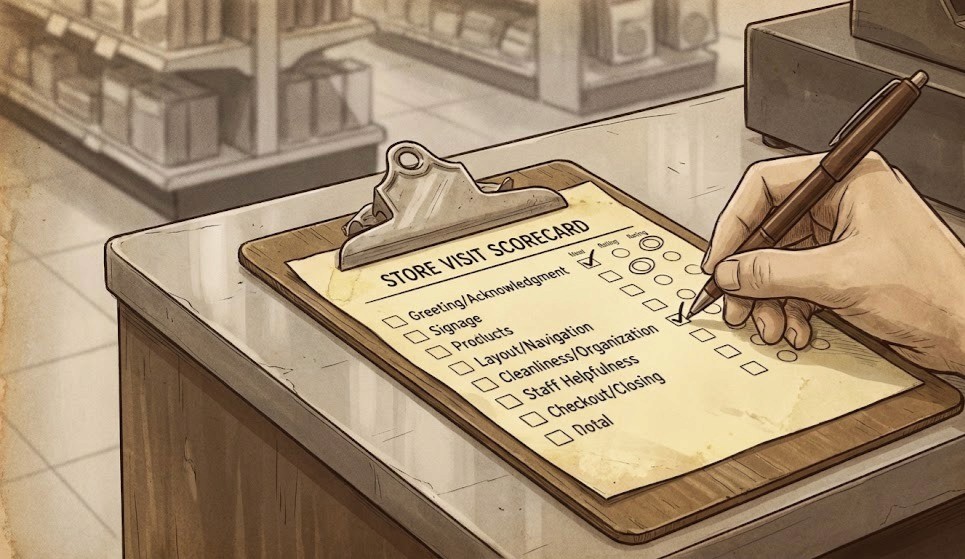
Then they report what really happened using a structured checklist and scoring system, plus notes on the experience.
Think of it as an operational audit from the customer’s point of view, quiet, repeatable, and focused on execution.
Why it works (when done properly)
Mystery shopping is effective because it captures reality, not intent.
It shows what happens on the floor, not what’s written in the playbook
It uses a consistent questionnaire and scoring, so results are comparable
It can run across multiple locations and time periods, so you see trends
It can be done on competitors too, so you get field-level intelligence
If you operate multiple branches, franchises, or teams, this is especially powerful because it exposes inconsistency, the hidden killer of brand reputation.
The kinds of issues mystery shopping uncovers
Most customer experience problems aren’t dramatic. They’re small and repeated, which is why they quietly hurt conversion and retention.
Mystery shopping commonly reveals things like:
Weak or inconsistent greetings and engagement
Long wait times, poor queue handling, slow response on calls/WhatsApp
Staff with incomplete product knowledge or poor discovery questions
Missed upsell/cross-sell opportunities at the exact moment of intent
Unclear store layout, confusion during checkout, or lack of follow-through
Poor complaint handling (the moment that decides churn vs loyalty)
Cleanliness, ambiance, grooming, and basic service hygiene gaps
These are hard to catch through NPS alone, and they rarely show up in revenue dashboards until damage is already done.
The business benefits (beyond “checking service”)
1) You see the true customer experience
Mystery shopping closes the perception gap between what management believes and what customers actually experience. Once you have this ground-truth view, you can fix the right problems instead of guessing.
2) You get consistency across locations
For UAE businesses with multiple outlets, the goal isn’t just to have a strong standard—it’s to execute it the same way in Dubai, Abu Dhabi, Sharjah, or anywhere else.
Mystery shopping helps you benchmark every location against the same standards, compare performance fairly, and identify top outlets whose practices can be replicated across the network.
3) You improve employee performance with objective coaching
Because mystery shopping measures real behavior, it becomes a practical training tool. It highlights exactly what needs coaching: greeting, discovery questions, objection handling, etiquette, confidence, and closing.
It also makes recognition and incentives more fair - based on observed performance, not opinions.
4) You capture missed revenue at the “last mile”
A lot of businesses spend heavily on marketing, footfall, ads, and lead generation. then lose money at the moment that matters: the customer interaction.
Mystery shopping often reveals:
Leads not being followed up fast enough
Staff not asking the right questions to recommend the right product
Poor closing behavior (“Let me know if you need anything” instead of guiding a purchase)
Missed add-ons and upgrades that customers would have accepted
When you fix these, conversion and ticket size typically improve without increasing ad spend.
5) You reduce compliance and brand risk
In regulated or high-trust sectors (banks, telecom, healthcare, pharmacies, hospitality), execution errors can become legal, reputational, or safety problems.
Mystery shopping can verify whether teams follow the required scripts and processes—like disclosures, KYC steps, hygiene standards, or policy compliance, consistently across every shift and outlet.
6) You gain real competitor intelligence
Competitor research often stays at the marketing level (pricing pages and ads). Mystery shopping lets you see what competitors do in reality:
How they greet and pitch
How they handle objections
What offers they push
How they follow up
What “small” service touches make customers feel taken care of
Instead of guessing why they’re winning, you see the playbook on the ground.
7) You build a continuous improvement loop
The best programs aren’t one-time audits. They run regularly (monthly or quarterly), track trends by outlet and metric, and feed directly into:
Training updates
SOP improvements
Incentive structures
Store manager action plans
Re-checks to confirm the fix worked
That’s how mystery shopping becomes an operating system, not a report.
An AI-first way to think about it (for founders/operators)
If you're building a modern, data-driven business, treat mystery shopping as a structured data stream:
Each visit is a labeled datapoint (location, date, channel, score, issue tags)
Over time, you can correlate scores with revenue, churn, NPS/CSAT, or staff turnover
You can prioritize action where impact is highest (low score + high revenue location = urgent)
In other words: mystery shopping turns "service quality" into measurable execution you can manage like any other KPI.
How to start in the UAE (simple pilot)
If you're new to this, don't overcomplicate it. Start with a pilot:
Run 1010,2020 mystery shops across Dubai and Abu Dhabi (or across your highest-value branches)
Use one standardized checklist and scoring model
Fix the top 33 recurring friction points
Re-check in 3030 days to confirm improvement
This gives you quick wins and proves ROI before scaling the program.
Further reading (sources you included)
https://www.intouchinsight.com/resources/guides/what-is-mystery-shopping/
https://intelli-shop.com/blog/how-does-mystery-shopping-work/
https://www.360connect.com/learning-center/asset/11787_top-10-benefits-of-a-mystery-shop-program/
https://v5global.com/mystery-shopping-how-it-can-help-businesses-grow/
https://www.gosurvey.in/blog/why-mystery-shopping-program-is-important-for-retail-sector